Search Amazon for a 55-inch TV with Dolby Vision and Dolby Atmos and you get dozens of sets, from about Rs 38,000 to well over Rs 2 lakh, all carrying the same two logos. The logos are cheap to add. What decides whether you actually see a better picture is the panel behind them, and whether you hear real Atmos depends mostly on what you connect the TV to.
So this guide picks 55-inch TVs for watching films and series at home, from our default choice down to a budget option, and the price ladder below groups them by how much of Dolby Vision each panel can show. Every pick has both formats confirmed by its manufacturer, because several popular listings get this wrong.
What actually matters when buying
Local dimming decides how much Dolby Vision you see. Dolby Vision sends scene-by-scene instructions so the TV can map a film’s brightness and colour to what its own screen can do. To follow those instructions well, the TV has to brighten one part of the picture while keeping another dark. Mini LED TVs split the backlight into many zones that dim independently, and OLED lights each pixel on its own. A TV with one uniform backlight receives the same signal but shows a flatter picture, and on a dim panel Dolby Vision can look darker than the TV’s normal mode. That is why some owners call it a gimmick.
Brightness is the other half. Sunlight, headlights and neon are where HDR earns its keep. Brands measure peak brightness in different ways, so use the figures as a rough guide, not a precise comparison.
Built-in Atmos is a processed effect. Every pick here decodes Dolby Atmos. Without speakers that fire upward, though, the height effect is created by processing rather than coming from above you. More drivers and a bass unit make it fuller; they don’t add a ceiling.
eARC is the port for a soundbar. For lossless Dolby TrueHD Atmos from a Blu-ray player or streaming box, the TV needs HDMI eARC. Older ARC has limited bandwidth and handles only compressed formats. Our guide to TVs with multiple HDMI ports explains which port to use.
Your streaming plan has to include it. On Netflix, only the Premium plan (Rs 649 a month) streams 4K with HDR, and Atmos needs that Ultra HD plan too. JioHotstar adds 4K Dolby Vision only on its Premium plan (Rs 299 a month). Prime Video needs full Prime for 4K; Prime Lite tops out at 720p.
Quick answer
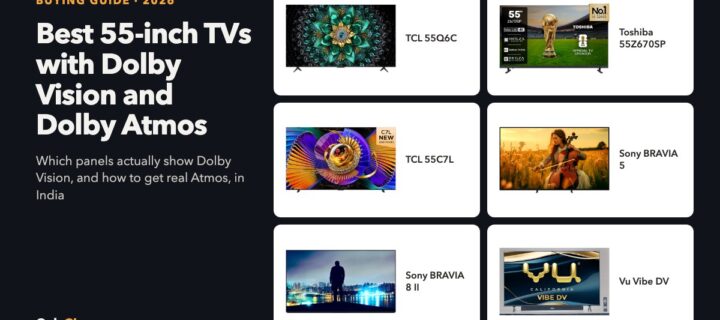
- Our pick: TCL 55Q6C, around Rs 60,000. The cheapest in-stock 55-inch whose maker confirms Mini LED dimming, plus Dolby Vision IQ, Onkyo 2.1 Atmos sound with a bass unit, and eARC. Watch out: TCL doesn’t publish a zone count for the 55-inch.
- Alternative: Toshiba 55Z670SP, around Rs 65,000. Mini LED with a published 128 zones and 600 nits, plus four front-firing speakers. Downside: it runs VIDAA, not Google TV.
- Bright-room pick: TCL 55C7L, around Rs 99,000. 800 dimming zones, up to 2,700 nits and Bang & Olufsen-tuned sound. Risk: a small, mixed early review base.
- Premium: Sony BRAVIA 5 K-55XR50, around Rs 1,17,000. Mini LED with Sony’s picture tuning and calibrated modes for Netflix and Prime Video. Cost: about Rs 57,000 more than the Q6C.
- OLED: Sony BRAVIA 8 II K-55XR80M2, around Rs 2,44,500. Per-pixel light for dark-room viewing, and sound from the screen itself. Only if money is no object.
- Budget: Vu Vibe DV 55VIBE-DV, around Rs 39,000. Both formats plus an 88 W built-in Atmos soundbar. Trade-off: no local dimming, so Dolby Vision adds little.
In this guide
- The price ladder: what each step buys
- TCL 55Q6C
- Toshiba 55Z670SP
- TCL 55C7L
- Sony BRAVIA 5 K-55XR50
- Sony BRAVIA 8 II K-55XR80M2
- Vu Vibe DV 55VIBE-DV
- Check the model code before you pay
- Why there’s no Samsung here
- Other models we considered
- FAQ
- Which one should you buy?
| Model | Price | Best for |
|---|---|---|
| TCL 55Q6C | Rs 60,000 | Most Dolby Vision per rupee |
| Toshiba 55Z670SP | Rs 65,000 | Comparable published specs |
| TCL 55C7L | Rs 99,000 | Bright rooms, HDR punch |
| Sony K-55XR50 | Rs 1,17,000 | Sony tuning, calibrated modes |
| Sony K-55XR80M2 | Rs 2,44,500 | Dark-room OLED |
| Vu 55VIBE-DV | Rs 39,000 | Sound first, small budget |
The price ladder: what each step buys
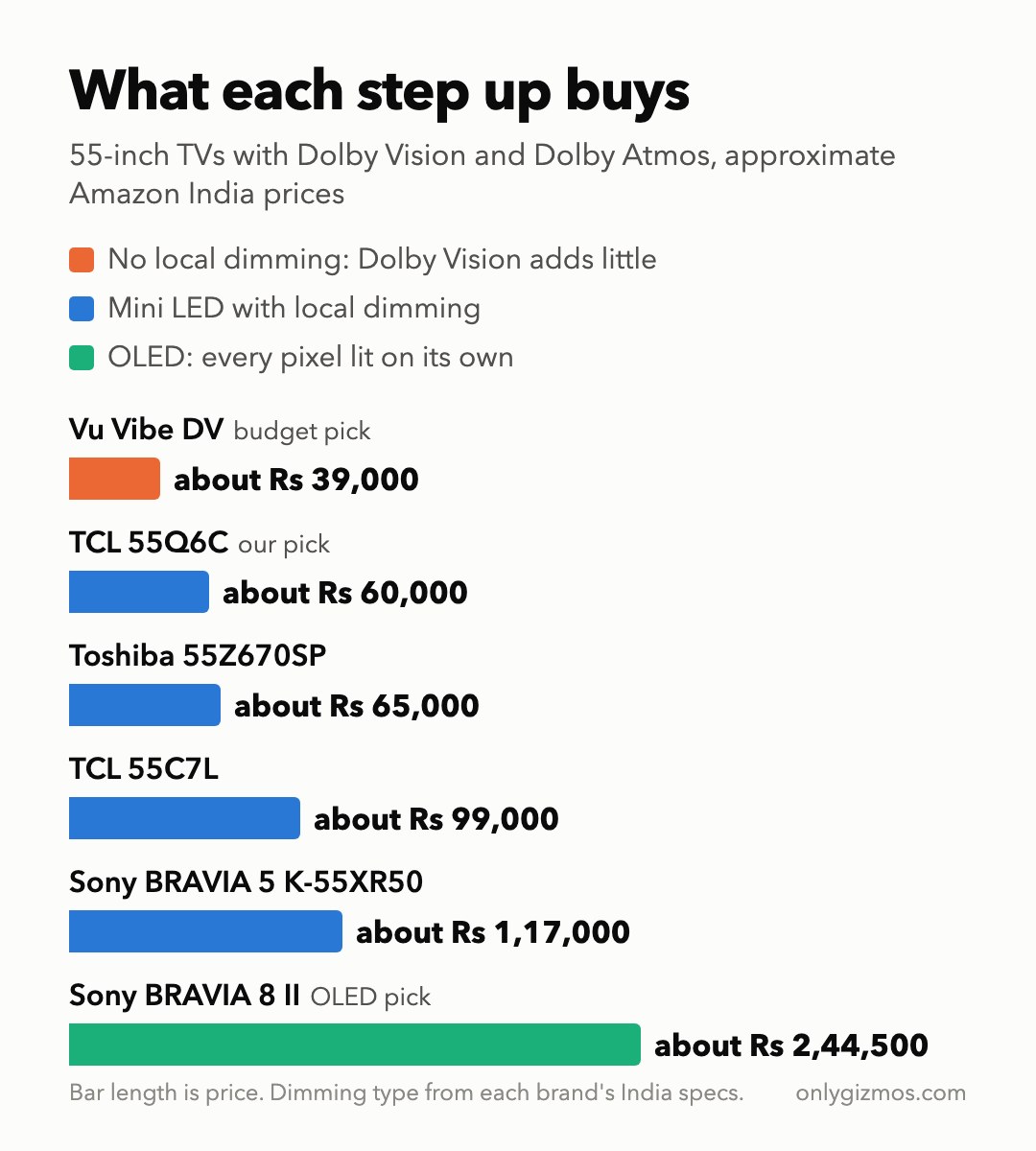
From the Vu to the TCL Q6C: about Rs 21,000. This is the step that matters most for Dolby Vision. It buys local dimming, so highlights can be bright while the letterbox bars and night skies stay dark. You give up the Vu’s 88 W soundbar for a smaller 2.1 system, so plan for a soundbar later if sound matters.
From the Q6C to the C7L: about Rs 39,000. You pay for published brightness and zones: up to 2,700 nits and 800 zones. In a bright living room with afternoon sun, that headroom is what you’ll notice. In a dark room after dinner, the Q6C already does most of the job.
From the C7L to the Sony BRAVIA 5: about Rs 18,000. On paper you get less: Sony publishes no zone count. What you pay for is Sony’s picture tuning and modes calibrated for Netflix and Prime Video.
The streaming cost nobody mentions. Netflix Premium costs Rs 150 a month more than Standard: Rs 1,800 a year, or Rs 9,000 over five years. JioHotstar’s Dolby Vision plan is also Rs 150 a month more than its Atmos-only Super plan. If you won’t pay for those plans, a cheaper TV and a soundbar may serve you better.
TCL 55Q6C: Our pick
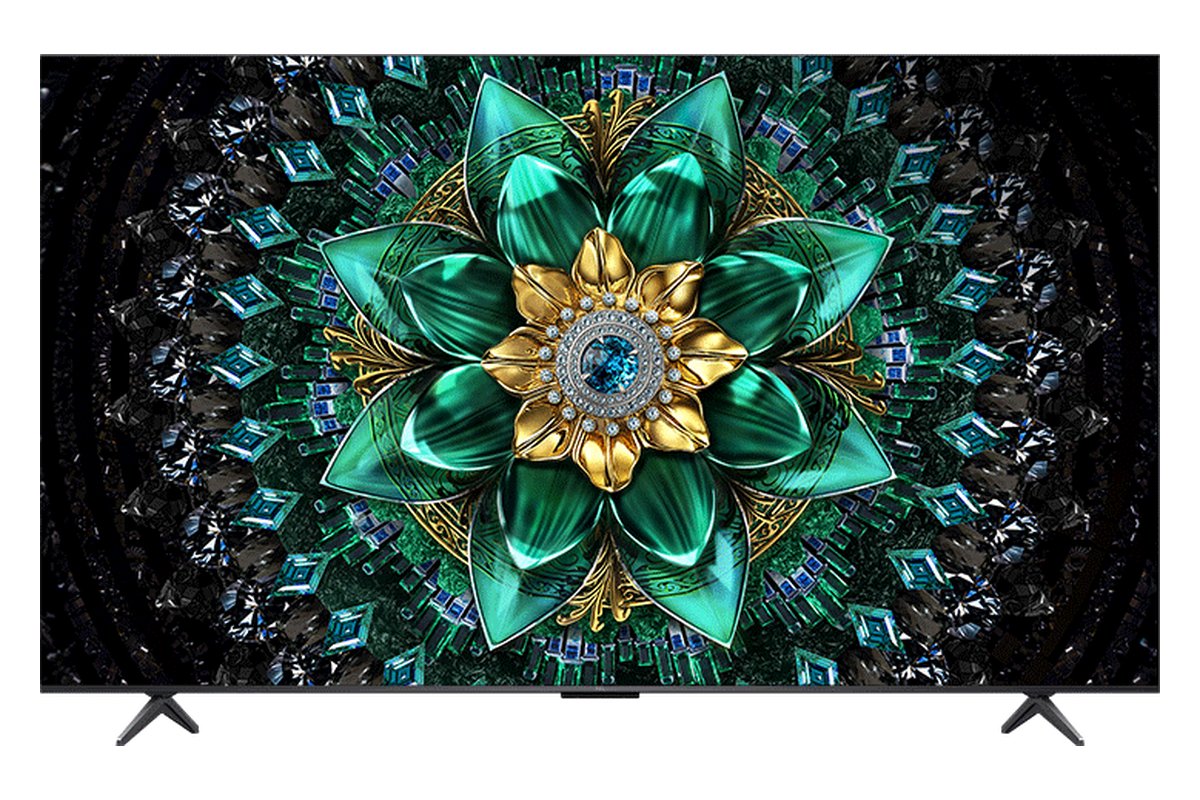
The 55Q6C is where Dolby Vision starts to look like the format it is meant to be. Its backlight is QD-Mini LED with local dimming, behind a high-contrast HVA panel, and it supports Dolby Vision IQ, which uses a light sensor to adjust the picture for a bright or dark room. HDR10+ and HLG are covered too, so it handles every HDR format you’re likely to stream.
Sound has more to it than the usual pair of small speakers. An Onkyo-branded 2.1 system pairs two 10 W speakers with a 20 W bass unit on the back, and it decodes Atmos. There’s eARC for a soundbar, and Google TV for apps.
One thing to know: TCL’s “up to 512 zones” applies to the 98-inch model. The 55-inch’s zone count isn’t published, so expect fewer.
Owners rate the Q6C 4.1 out of 5 from more than 1,800 ratings across sizes, with 15% one-star ratings. One 55-inch owner fixed occasional judder in cricket by changing the motion settings, and another found TCL’s installation team responsive. Several say they paid Rs 35,000 to Rs 40,000 in a sale, so it’s worth watching for one. A single 65-inch owner reports a failure at two months, so keep the invoice and register the warranty.
Skip it if you want Sony’s calibrated streaming modes, or if TCL isn’t a brand you’d trust for service where you live.
Toshiba 55Z670SP: The alternative Mini LED
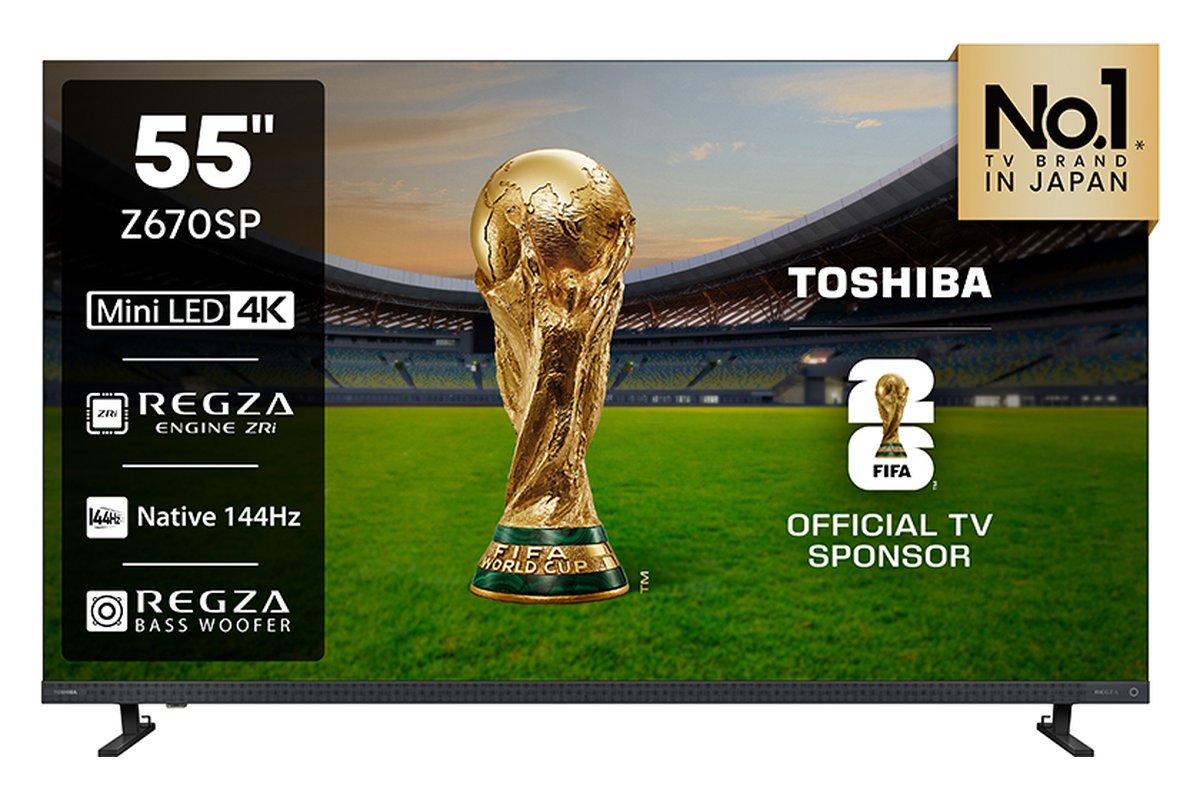
If you want a Mini LED you can compare on paper, the Toshiba is the one. It has 128 dimming zones and a 600-nit peak (400 nits typical), and it supports Dolby Vision IQ and HDR10+. Four front-firing speakers decode Atmos, and eARC is on HDMI 2.
The difference from the TCL is the software. The 55Z670SP runs VIDAA, not Google TV, so check that it has every app you use, including any regional ones, before you pay.
At around Rs 65,000 it costs about Rs 5,000 more than the Q6C. Avoid the 55Z570RP and 55Z570SP: they are different models, covered below.
Toshiba 55Z670SP on Amazon India
TCL 55C7L: The bright-room pick
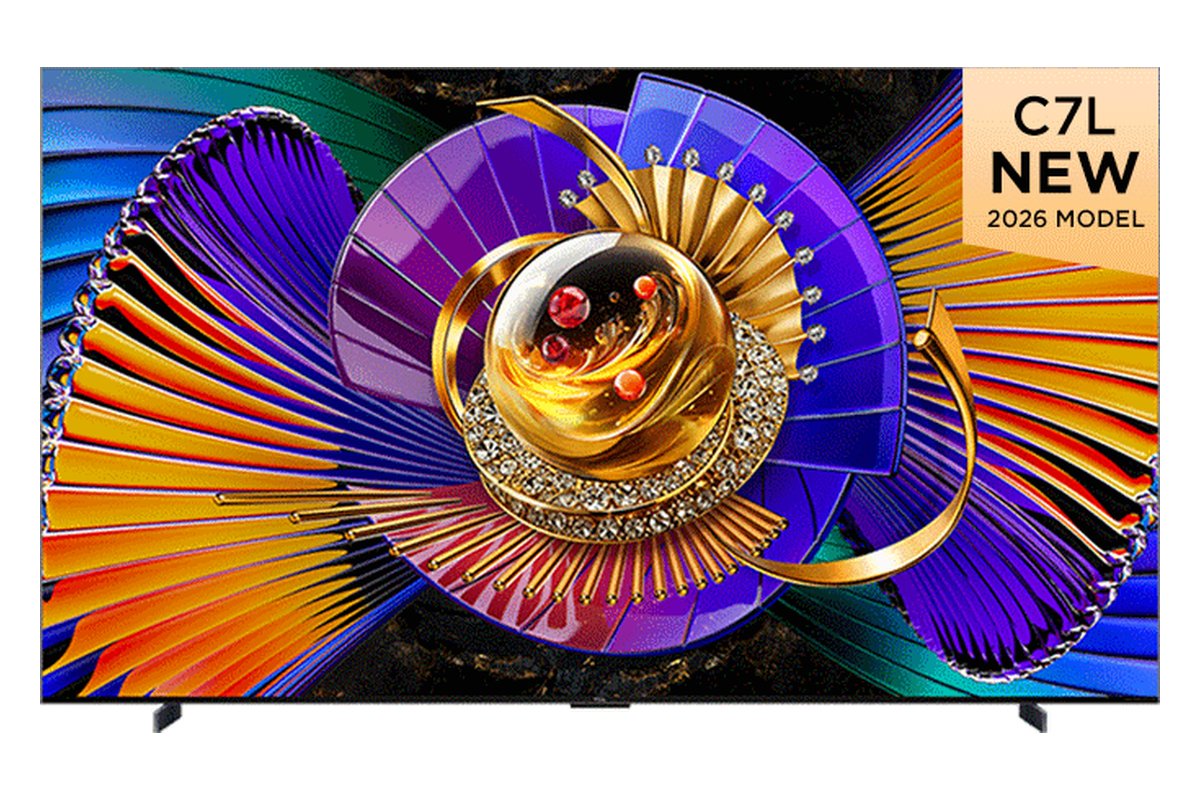
The C7L is for a bright room, or for anyone who wants HDR highlights that really jump. The 55-inch has 800 dimming zones and reaches up to 2,700 nits, and it supports Dolby Vision IQ and HDR10+. Sound is tuned by Bang & Olufsen and decodes Atmos, with eARC and Google TV as standard.
Early owners describe it as very bright. One feels its Dolby Vision mode benefits from some tweaking, so expect to spend a few minutes in the picture settings, and another finds the sound a little short of the Onkyo setup on TCL’s cheaper sets. The review base is small: 21 ratings, 15% of them one-star, including one 55-inch unit that arrived with dead pixel lines. Check the screen on delivery.
At around Rs 99,000 it is about Rs 18,000 below the Sony BRAVIA 5 and, unlike the Sony, publishes its brightness and zone figures. If you don’t need Sony’s tuning or brand, this is the better-specified screen.
Sony BRAVIA 5 K-55XR50: The premium pick
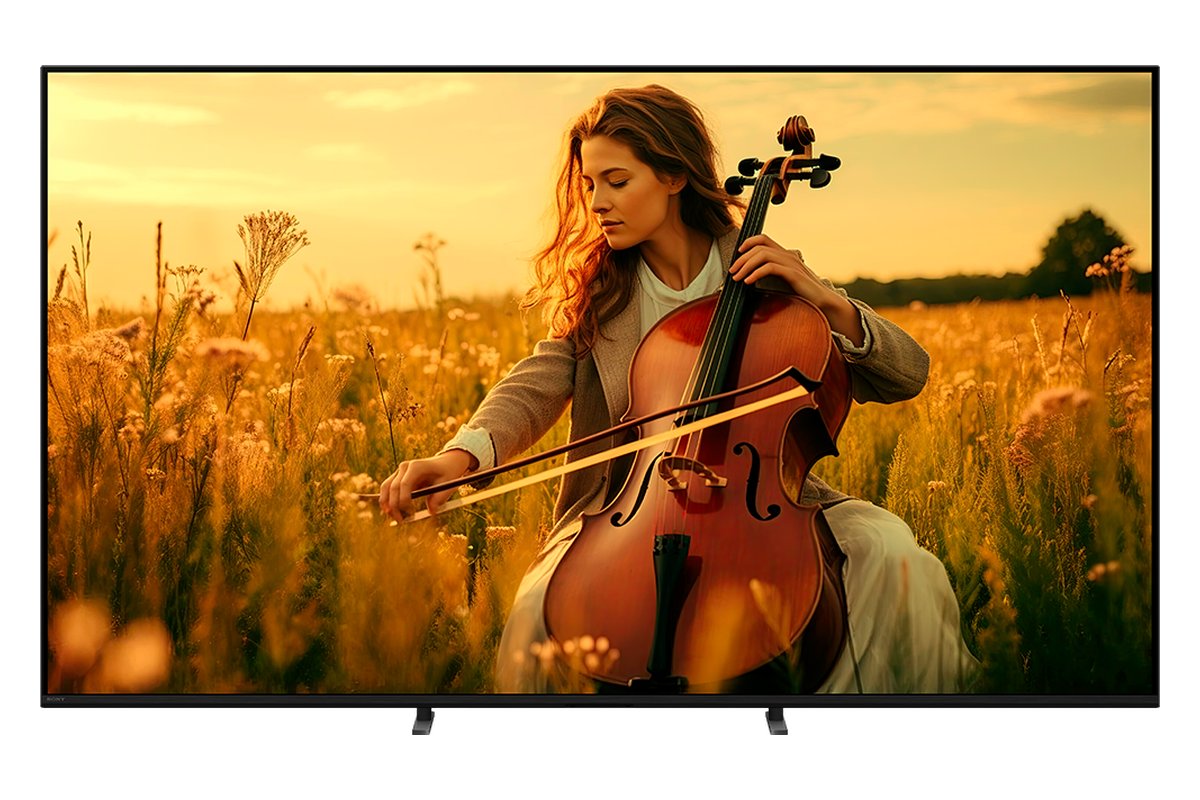
Many Indian buyers simply trust Sony’s picture, and for streaming films there is substance behind that. The BRAVIA 5 is a Mini LED TV with local dimming, and it has Studio Calibrated picture modes for Netflix, Prime Video and Sony Pictures Core, so you get an accurate picture from those services without fiddling with settings. It supports Dolby Vision, HDR10 and HLG, but not HDR10+, which costs you nothing on Netflix because Netflix uses Dolby Vision or HDR10.
Sound comes from four 10 W speakers: two full-range drivers and two tweeters that place voices on the screen. Atmos is decoded, and Sony’s 3D Surround Upscaling spreads stereo and 5.1 wider. With a compatible Sony soundbar, the TV can act as the centre speaker. eARC and Google TV complete it.
The compromise is value. Sony publishes no zone count, and at around Rs 1,17,000 the BRAVIA 5 costs about Rs 57,000 more than the Q6C. You are paying for tuning and calibrated modes, not for a bigger spec sheet.
You’ll see two codes. The K-55XR55A has the same Mini LED panel, HDR formats, calibrated modes and speakers but costs about Rs 21,000 more, so buy whichever is cheaper.
Sony BRAVIA 5 K-55XR50 on Amazon India
Sony BRAVIA 8 II K-55XR80M2: The OLED pick
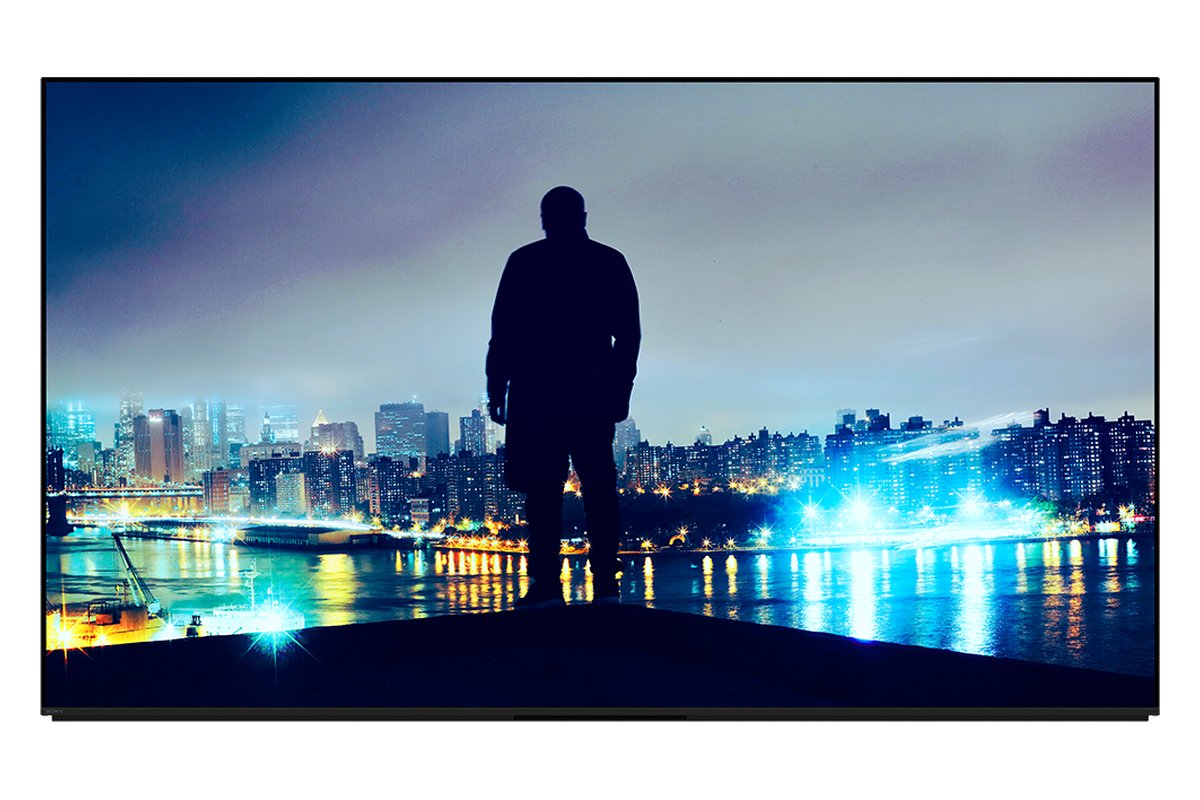
For films in a dark room, OLED is still the best way to watch Dolby Vision. Each pixel makes its own light, so stars sit on true black with no glow around them. The BRAVIA 8 II supports Dolby Vision, HDR10 and HLG, and it shares the BRAVIA 5’s calibrated modes for the big streaming services.
Its sound is unusual. Acoustic Surface Audio+ vibrates the screen with two actuators, so dialogue comes from the picture itself, and two subwoofers add body, 50 W in total. Atmos is decoded, and eARC is there for when you add a soundbar.
The problem is price: around Rs 2,44,500, more than double the BRAVIA 5. If you want an OLED for less, LG’s C6 (below) is worth watching for when it’s back in stock.
Sony BRAVIA 8 II K-55XR80M2 on Amazon India
Vu Vibe DV 55VIBE-DV: The budget pick
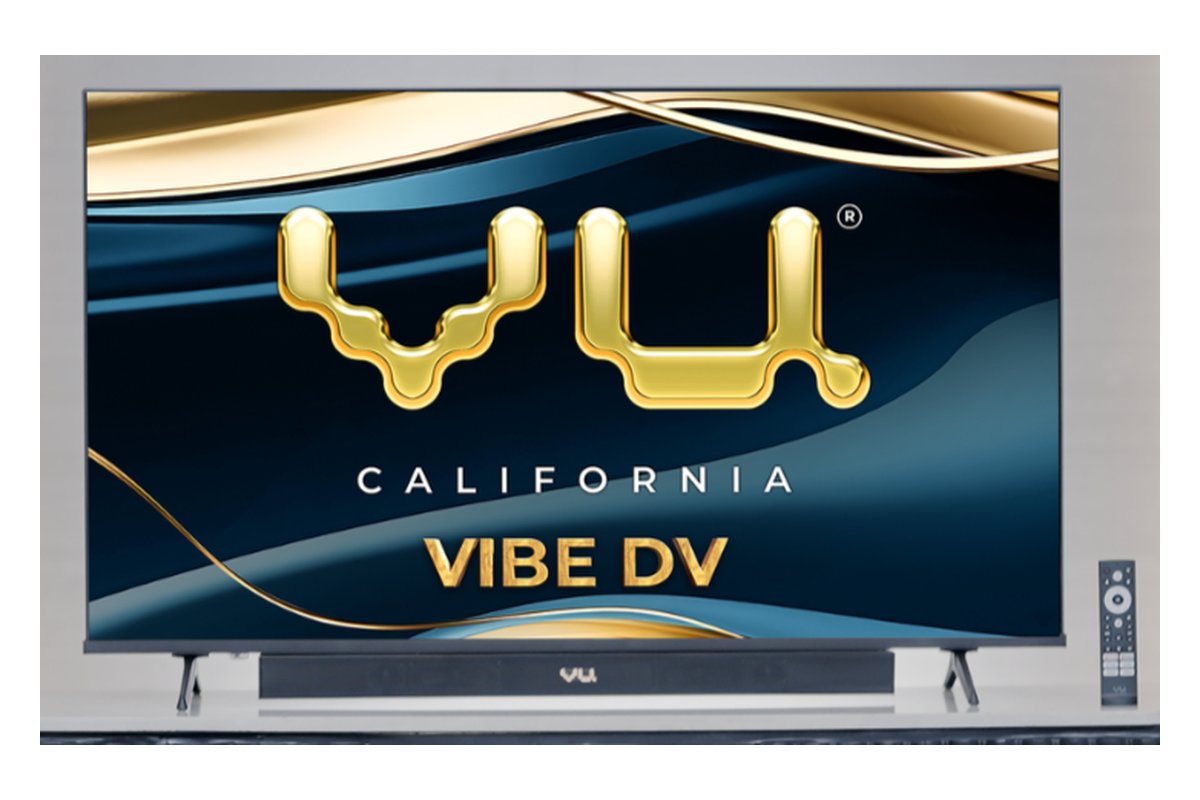
Under Rs 40,000, the honest answer is that no TV shows Dolby Vision at its best. So the Vu earns its place with sound. It has an 88 W Dolby Atmos sound system in an integrated soundbar, far more than the 24 to 30 W of the other budget sets we considered, and it supports Dolby Vision on a QLED panel. Google TV and a three-year warranty round it out.
The compromise is the picture. There’s no local dimming and the panel is rated at 400 nits, so Dolby Vision content will look much like regular HDR. Vu also doesn’t state whether it has eARC, which matters less here because the soundbar is built in. Owners rate it 4.2 out of 5 from about 2,100 ratings, with 10% one-star.
Buy it if dialogue, music and the movie’s rumble matter more to you than HDR highlights. If picture comes first, save up the extra Rs 21,000 for the Q6C.
Vu Vibe DV 55VIBE-DV on Amazon India
Check the model code before you pay
Amazon titles are unreliable on exactly these two features. These are the traps:
- Sony BRAVIA 2 II K-55S25BM2 decodes Dolby Atmos but supports only HDR10 and HLG, so no Dolby Vision. It sells for about Rs 63,000.
- TCL 55P6L is sold with “Dolby Vision & Atmos” in its Amazon title but has neither: it does Dolby Audio only.
- Xiaomi X Pro and X Series TVs, such as the L55MB-APIN and L55MB-AIN, have Dolby Vision, but Atmos works only as passthrough to a soundbar; the TV speakers do Dolby Audio and DTS:X.
- TCL 55Q6CS is not the 55Q6C. It is a 60 Hz model with plain Dolby Vision rather than Dolby Vision IQ.
- Toshiba 55Z570RP has no local dimming, and the 55Z570SP has no page on Toshiba’s Indian site. The Mini LED you want is the 55Z670SP.
Why there’s no Samsung here
Samsung’s Indian TVs use HDR10+, its rival dynamic HDR format, instead of Dolby Vision. Even flagships like the Neo QLED QA55QN80HAULXL and the OLED QA55S95HXULXL support HDR10+ and Dolby Atmos but not Dolby Vision. Netflix streams Dolby Vision or HDR10, not HDR10+, so on a Samsung, Netflix’s HDR titles play in HDR10. Samsung makes excellent TVs, but they don’t fit a guide built around Dolby Vision. If you’re open to Samsung, our best 55-inch 4K TVs under Rs 60000 includes one.
Other models we considered
LG OLED55C6PLA, out of stock. LG’s 2026 C6 OLED has Dolby Vision, a 40 W 2.2-channel Atmos system and eARC. It is worth watching for if you want an OLED for less than the Sony, but Amazon has no offer or price on it, or on any other LG 55-inch OLED, right now.
Hisense 55E8S, out of stock. A Mini LED with Dolby Vision IQ and a 2.1 Atmos system with a subwoofer. Currently unavailable on Amazon.
Sony BRAVIA 3 II K-55XR35M2, around Rs 90,000. It has both formats, but no local dimming and only 20 W of sound. For about Rs 9,000 more, the TCL C7L is the far better Dolby Vision screen.
Philips 55PQT8100/94, around Rs 38,000. One of the cheapest TVs with both formats and eARC confirmed by its maker, but it’s discontinued and has no local dimming.
Philips 55MLED610/94, around Rs 45,000. Sold as a Mini LED with Dolby Vision and Atmos, and it would undercut the Q6C by about Rs 15,000. Philips India has no product page for it, so we can’t confirm what you’d be getting.
Hisense 55UR8S, around Rs 1,20,000. An RGB Mini LED with both formats, but Hisense’s published brightness and speaker figures contradict each other, so we’re leaving it out until they’re corrected.
FAQ
Is Dolby Vision worth it on a cheap TV? Only a little. Without local dimming, the TV can’t brighten highlights while keeping dark areas dark, so Dolby Vision looks close to regular HDR and sometimes darker. The jump in picture comes from Mini LED or OLED, which starts at around Rs 60,000 among in-stock 55-inch TVs whose makers confirm it.
Do I need Netflix Premium for Dolby Vision and Atmos? Yes. Only Premium, at Rs 649 a month, streams 4K and HDR, and Netflix’s Atmos needs that Ultra HD plan, streaming quality set to High or Auto, and a connection of 3 Mbps or more. Some titles don’t have Atmos at all.
Why does Dolby Vision look darker than my normal picture mode? Dolby Vision follows the brightness the film was mastered for, while standard and vivid modes often push the whole picture brighter. On a dim TV without local dimming, that accuracy reads as dark. Dolby Vision IQ helps by adjusting for room light.
Does the TCL 55Q6C show Dolby Vision properly? Better than any cheaper set whose maker confirms local dimming, because its Mini LED backlight can dim parts of the screen. TCL doesn’t publish its 55-inch zone count, so expect less precise dimming than the C7L or Toshiba, whose figures are published.
Do TV speakers give real Dolby Atmos? They decode it, but without upward-firing speakers the height effect is processed. The Q6C’s 2.1 system and the Vu’s 88 W built-in soundbar give it more body than two small speakers. For overhead sound, add an Atmos soundbar with up-firing drivers over eARC.
Do I need a special HDMI cable? For a 4K Dolby Vision streaming box or Blu-ray player, use a cable certified as Premium High Speed (or Ultra High Speed) and a port with HDCP 2.2. Built-in apps like Netflix need no cable.
Which one should you buy?
Buy the TCL 55Q6C. It is the least you can spend on a 55-inch whose maker confirms Mini LED dimming, and its 2.1 sound with a bass unit gives Atmos more body than two small speakers. If you’d rather have published specs and don’t mind VIDAA, the Toshiba 55Z670SP is a close second.
For a bright living room, choose the TCL 55C7L. Pick the Sony BRAVIA 5 K-55XR50 if Sony’s tuning and calibrated modes are worth Rs 57,000 over the Q6C, and the BRAVIA 8 II only if you watch in the dark and budget is no object.
On a budget under Rs 40,000, buy the Vu Vibe DV for its sound, and accept that Dolby Vision won’t change much.
Last updated: October 2026