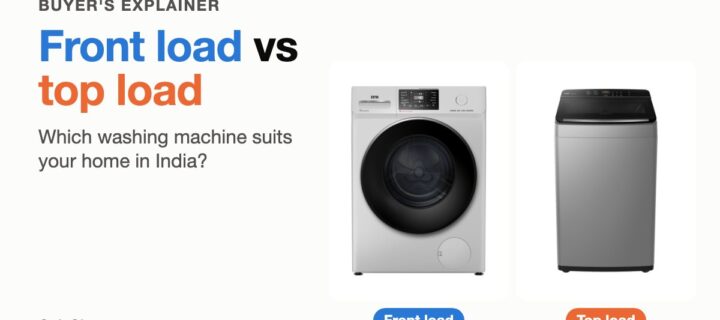
For most Indian homes, a top-loader is the right buy. At 7 kg it costs Rs 8,500 to 10,000 less, it finishes sooner, it’s easier on your back, and it costs less to run on electricity. Pay extra for a front-loader when water is scarce or comes by tanker, when you want hot washes for stains and hygiene, or when clothes dry indoors for half the year: it uses less than half the water and spins clothes drier.
One thing a front-loader won’t do in India is cut your power bill. The BEE labels on two 7 kg IFB machines show the front-loader using far more electricity, because its rated wash heats the water. Below are the numbers, then the decision by what really differs between homes: water pressure, hard water, power cuts, space and your back.
Front load or top load washing machine: which is better?
| If this is you | Buy | Why |
|---|---|---|
| Tight budget or quick daily washes | Top load | Rs 8,500 to 10,000 cheaper at 7 kg |
| Tanker or scarce water | Front load | Less than half the water per wash |
| Stains, baby clothes, towels | Front load | Heater up to 90 or 95 C |
| Back pain or older parents | Top load | No bending to load |
| Clothes dry indoors | Front load | 1200 rpm spin leaves them drier |
| Cramped or uneven floor | Top load | Fewer floor and door rules |
If two rows pull opposite ways, water and stains justify a front-loader; price and an aching back argue against one.
What is actually different inside
A front-loader turns a sideways drum, lifting and dropping the load in a shallow bath: easy on water, hard on time. Every one we cover heats its own water to 90 or 95 C and spins at up to 1200 rpm.
A top-loader fills an upright tub and churns the load with a finned plate at the bottom (a pulsator): quicker, thirstier, and spinning at around 700 to 740 rpm. Most in our top-load guide wash cold only; a few, like Whirlpool’s Magic Clean Pro SW H, add a heater. Both types take only cold water from the tap.
Front load vs top load water consumption and electricity
We took two 7 kg, 5-star machines from our own guides, the IFB Serena VXN 7012 front-loader and the IFB TL701MG1 top-loader, and worked out their label figures for five full washes a week at Rs 8 a unit.
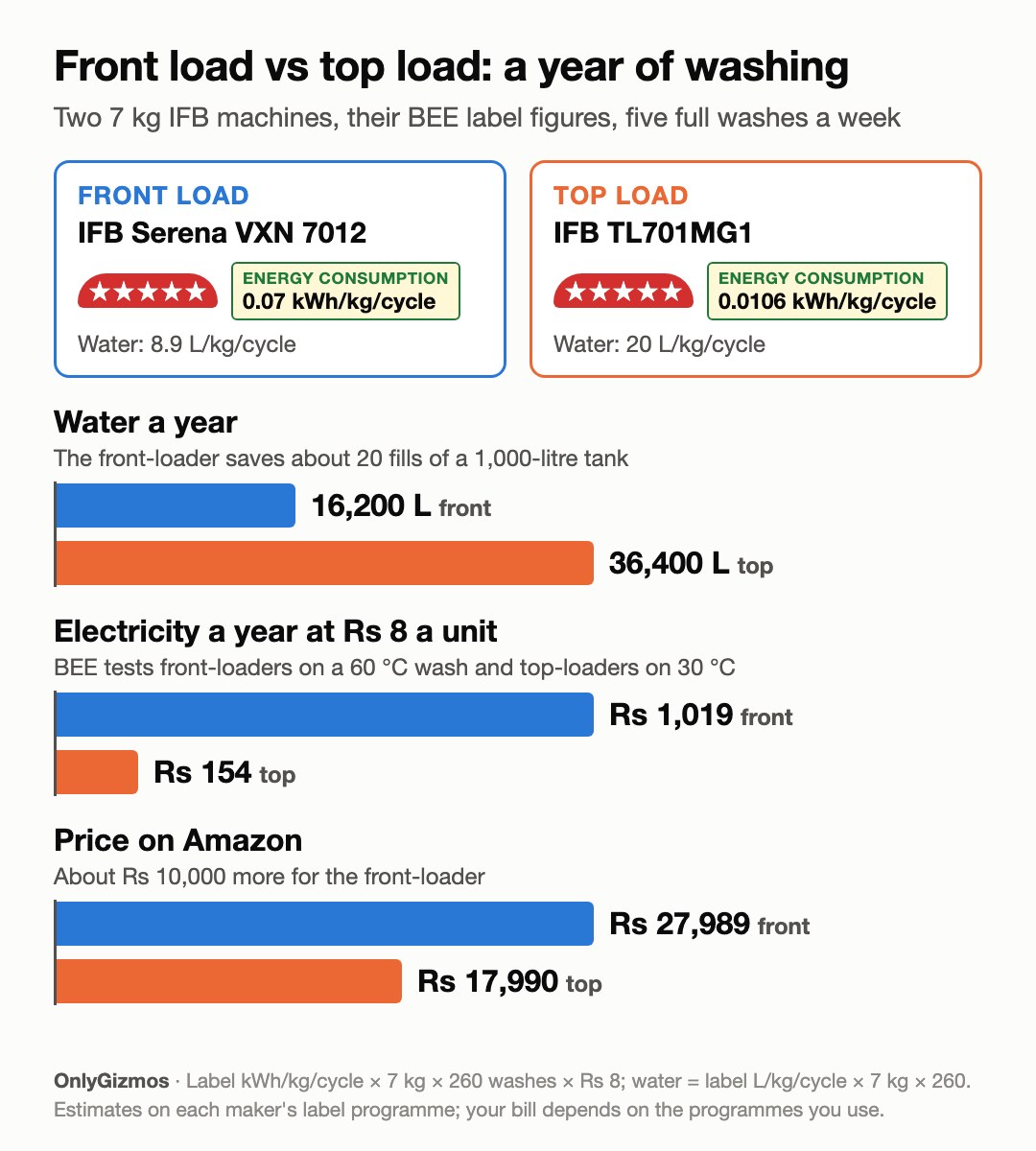
- Water: the front-loader needs about 62 litres a full load against 140 for the top-loader. Over a year that’s roughly 16,200 litres against 36,400, a saving of about 20,000 litres, or 20 fills of a 1,000-litre overhead tank.
- Electricity: the front-loader’s label works out to 0.49 units a wash, Rs 1,019 a year. The top-loader’s is 0.07 units, Rs 154 a year.
That gap isn’t like for like: BEE rates front-loaders on a 60 C cotton wash and top-loaders on a 30 C one, on separate star tables. The front-load label wash is a long eco “Cotton 60” cycle, and on the Bosch WAJ24266IN it uses the same 0.49 units as the IFB. Normal programmes show what heat costs: a full 7 kg cotton load on the Bosch uses 0.30 units at 20 C and 1.30 units on its regular 60 C wash, about Rs 624 against Rs 2,704 a year.
So use the heater on purpose. On Bosch’s figures, a front-loader washing cool costs about Rs 470 a year more than the IFB top-loader. Heat every load to 40 C and the gap grows to about Rs 1,900; at 60 C, about Rs 2,550. Keep hot washes for towels, bedding and stained clothes, and the water saving is the real win.
Which suits your home
Low water pressure or an overhead tank
This myth costs buyers money: front-loaders don’t need more pressure. LG asks for at least 50 kPa on both its front-loader and its top-loader; IFB asks for 0.3 bar (30 kPa) on both types, and Bosch also starts at 30 kPa.
What matters is the height of your tank. Every metre of height from the water in your tank down to the machine adds roughly 10 kPa, a little less after pipe losses. A little over 3 metres meets the 30 kPa minimum; LG’s 50 kPa needs about 5. A top-floor flat directly below the tank may have neither, and then either type will fill slowly or throw a water-supply error. If that’s your home, budget for a pressure pump whichever type you choose. Whirlpool’s “Zero Pressure Fill” is its own fill-speed claim, not a lower rated minimum.
Hard water
No maker claims one type handles hard water better. Either way, hard water needs a bigger detergent dose. The part that suffers is the heater, because scale builds on it, and every front-loader has one while most cheap top-loaders don’t. So in a hard-water town, plan a descaling run on a front-loader every few months (Bosch suggests every three). Don’t pay extra for labels: “Hard Water Wash” on some LG and Whirlpool top-loaders is a programme, and IFB’s Aqua Energie is a treatment device that IFB doesn’t call a softener and hasn’t published tests for.
Power cuts mid-wash
Neither type should lose your wash: the LG and IFB machines here, front and top, resume where they stopped. The catch is the outage itself. A front-loader’s door stays locked while water is inside, so getting clothes out means draining the drum through the small filter flap at the bottom, with a tray and towel ready.
Time per wash
A front-loader’s full cotton wash is slow: the Bosch takes 2 hours 50 minutes to almost 3 hours for a full 7 kg load. Top-loader brands don’t publish full cycle times, but they’re shorter, and IFB lets you set the wash stage anywhere from 5 to 20 minutes. Both types have 25 to 30 minute quick programmes, though a front-loader’s takes only about 2 kg.
Stains and hygiene
Hot water does the work on oil, sweat, baby clothes, bedding and towels. Every front-loader here has a heater. Among top-loaders you have to look for one: Whirlpool’s Pro SW H is the cheapest top-loader with a heater in our top-load guide.
Space and installation
A front-loader is pickier about where it stands. LG wants a perfectly level, firm floor (concrete is best) and clear space in front: with the door swung open the machine needs 89 cm of depth. Bosch’s needs 107 cm. All three front-loaders ship with transit bolts that must come out before the first wash. A top-loader needs headroom instead: LG’s T70VBMB1Z is 117 cm tall with the lid up, so it won’t sit under a low counter.
Bending and back pain
You load a front-loader through a door at knee height, so every load means bending or kneeling. Don’t fix that with a generic stand. LG tells you not to put either type on a stand or platform, except LG’s own stand for its front-loader. Bosch permits a raised base only if you bolt the feet with its brackets, and IFB wants the machine straight on the floor. If anyone at home has a bad back, buy a top-loader.
Balcony placement and vibration
On a utility balcony, keep the machine covered: LG and IFB warn against direct sun and rain, and IFB’s electronics may fail above 50 C. A front-loader spinning at 1200 rpm needs the same firm floor as indoors, never a trolley or stand. A covered balcony with a sound floor suits either type.
Repair and lifespan
You’ll hear “top-loaders last longer” a lot, but there’s no good Indian data. New Zealand’s Consumer NZ surveyed owners and put both types level: 88% of front-loaders and 86% of top-loaders had no fault in five years. Warranty depends on the brand, not the type. IFB gives four years comprehensive on both kinds; LG, Bosch and Whirlpool give two years plus ten on the motor.
Price at the same capacity
At 7 kg on Amazon, the IFB pair is about Rs 10,000 apart and the LG pair about Rs 8,500. Even the Bosch WAJ24266IN, the lowest-priced 7 kg front-loader we recommend at around Rs 26,990, is about Rs 9,000 above IFB’s top-loader. Power won’t win that back; water only does if you buy tankers.
Front load vs top load detergent: what is the difference?
Buy the detergent for your machine type: Ariel Matic and Surf Excel Matic each come in front-load and top-load versions. The front-load one makes less foam, because a front-loader washes in so little water that suds can’t rinse out. Excess foam makes Samsung front-loaders pause mid-cycle and leaves residue on clothes.
- Don’t use hand-wash powder in either machine; it makes too much lather.
- Liquid is fine in both fully automatic types. Ariel’s dose is about 60 ml for a front-loader against 80 ml for a top-loader.
- With hard water, dose to the hard-water line on the pack.
Front load vs top load maintenance
A front-loader needs a minute after every wash: wipe the rubber door seal, leave the door ajar to dry, and run Tub Clean about monthly. Skip it and you get the musty smell owners complain about: a large Consumer Reports survey in the US put odour and mould at 13% of front-loaders each. Clean the drain filter every six months, with a tray ready.
A top-loader drains by gravity, so mould is less of an issue. Its lint filter needs emptying every few washes, and it still wants a monthly Tub Clean.
Myths and marketing terms
- “Front-loaders save electricity.” Not on Indian labels. They save water; heating is why their figure is higher.
- “5 star” on both. The two types have separate star tables, so compare kWh and litres only within a type. Our BEE star rating explainer covers the label.
- “In-built heater.” Look for a heater row or wash temperatures in the spec table; some top-loaders sold “with heater” only warm a small steam load.
Real machines to compare
All six are current picks from our two washer guides, in stock on Amazon.
LG FHB1207Z2W (front load)
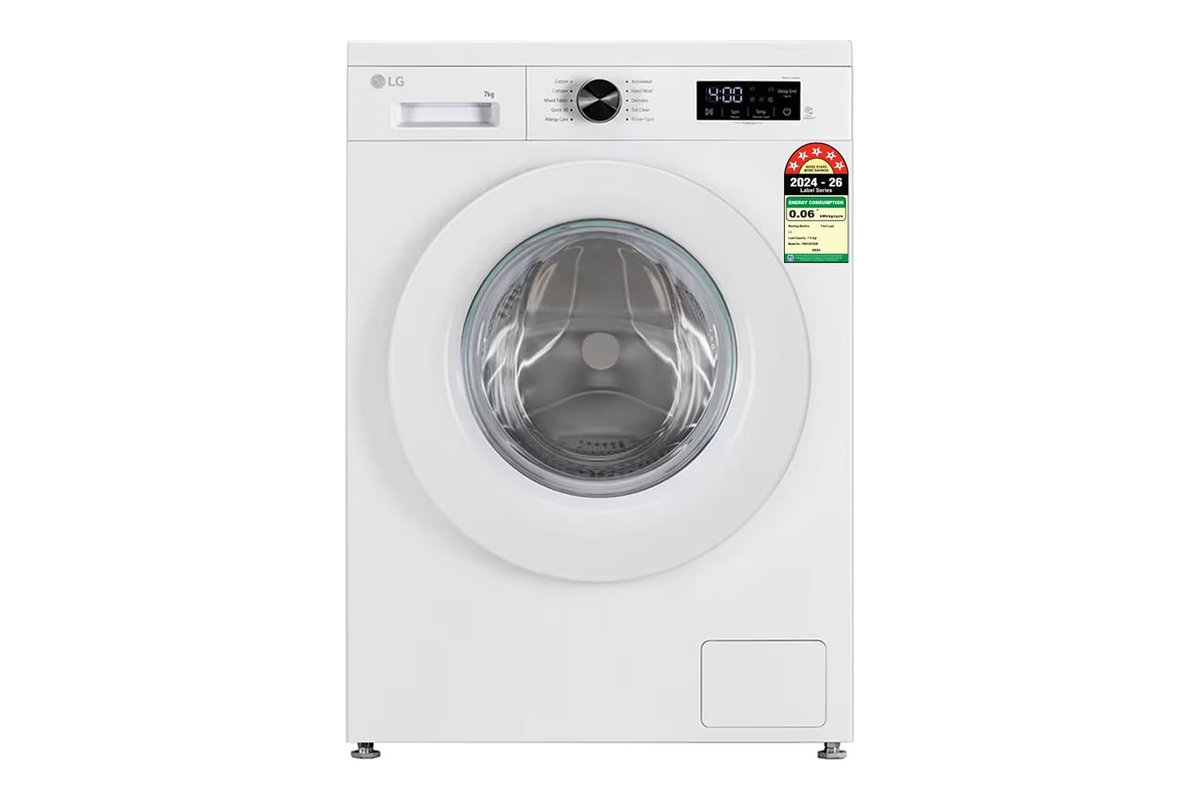
Our default front-loader: 1200 rpm for drier clothes, washes up to 95 C, and at 44 cm deep the slimmest front-loader here, useful on a narrow balcony. Its label reads 0.06 units per kg per wash, about Rs 874 a year. Check the LG FHB1207Z2W on Amazon, around Rs 27,490.
IFB Serena VXN 7012 (front load)
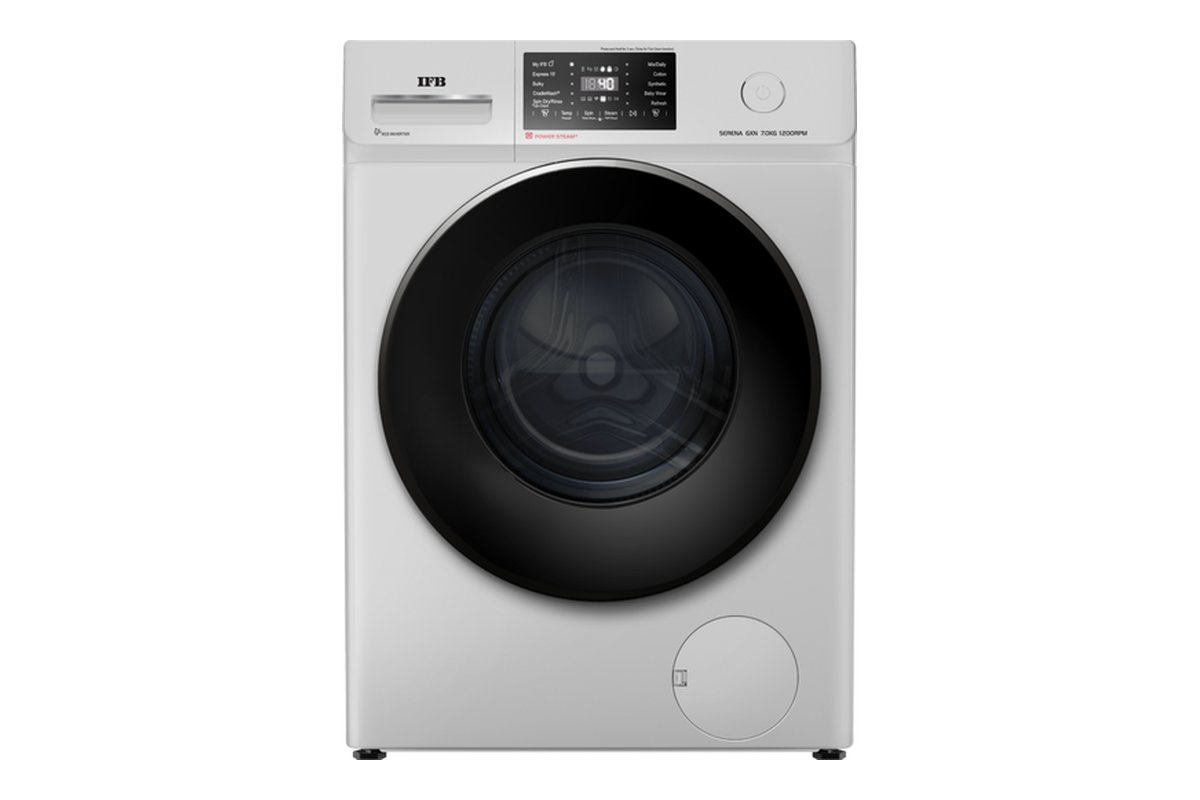
The front-loader in our chart, with four years of comprehensive cover, the longest here. Its Wi-Fi matters more than usual, because Express 30 and Warm Soak run only from the MY IFB app. See the IFB Serena VXN 7012 on Amazon, around Rs 27,989.
Bosch WAJ24266IN (front load)
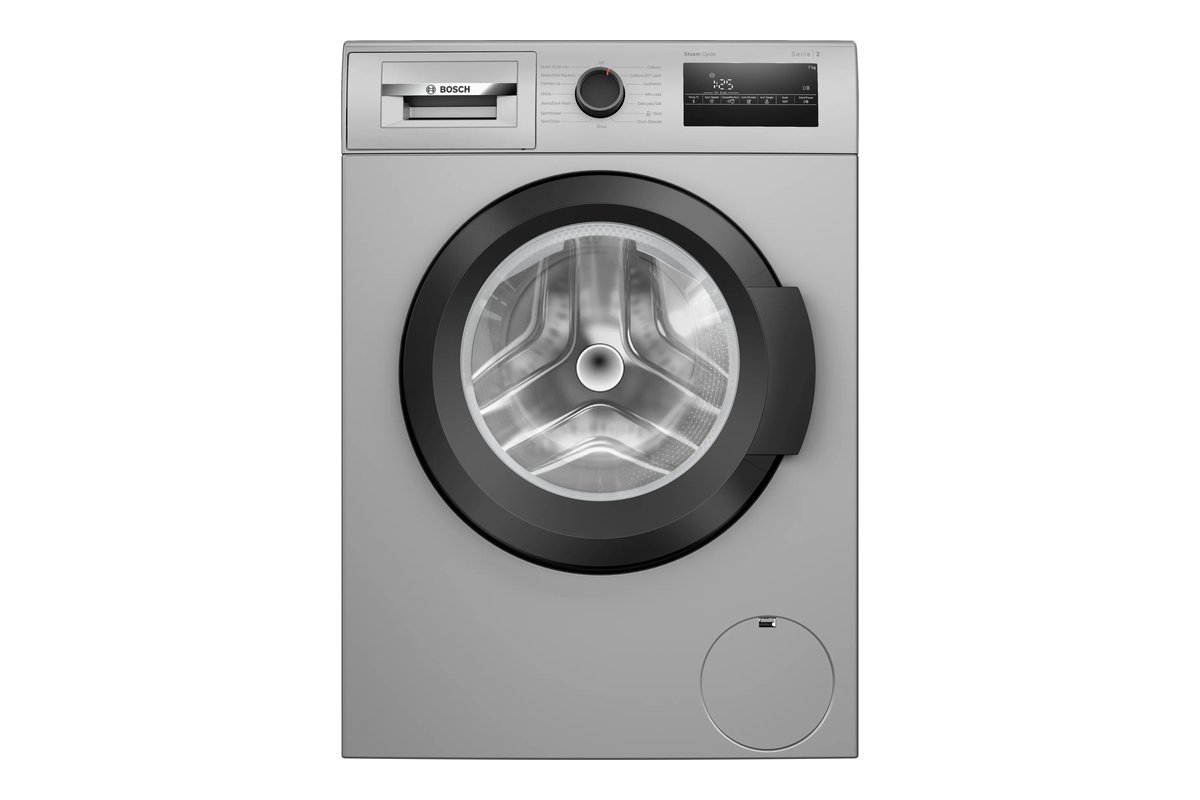
Our lowest-priced 7 kg front-load pick. At 72 kg it’s 13 kg heavier than the LG, and owners describe it as steady. Its Drum Descale programme suits hard-water homes. Bosch publishes no star rating, so there’s no label figure to compare. Check the Bosch WAJ24266IN on Amazon, around Rs 26,990.
IFB TL701MG1 (top load)
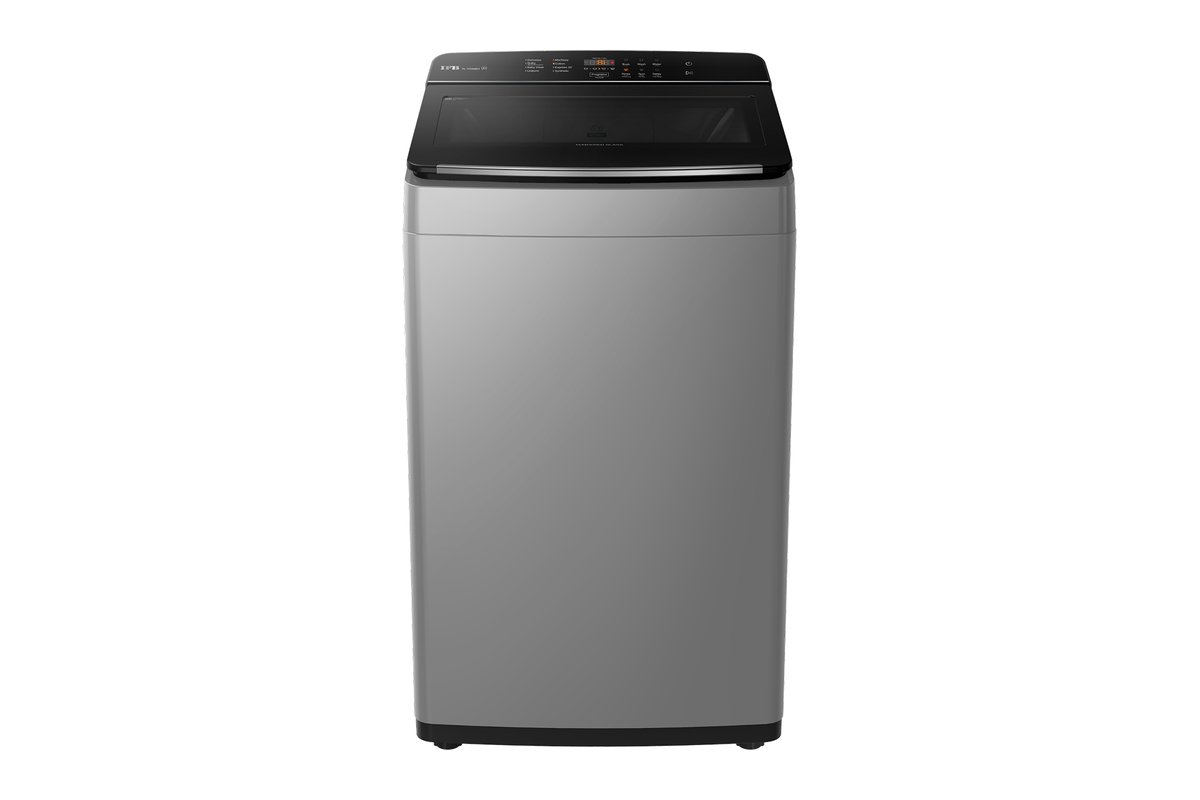
Our default top-loader and the chart’s other half: four years of comprehensive cover and the fewest one-star ratings in our top-load research. It washes cold only, so no hot washes. See the IFB TL701MG1 on Amazon, around Rs 17,990.
LG T70VBMB1Z (top load)
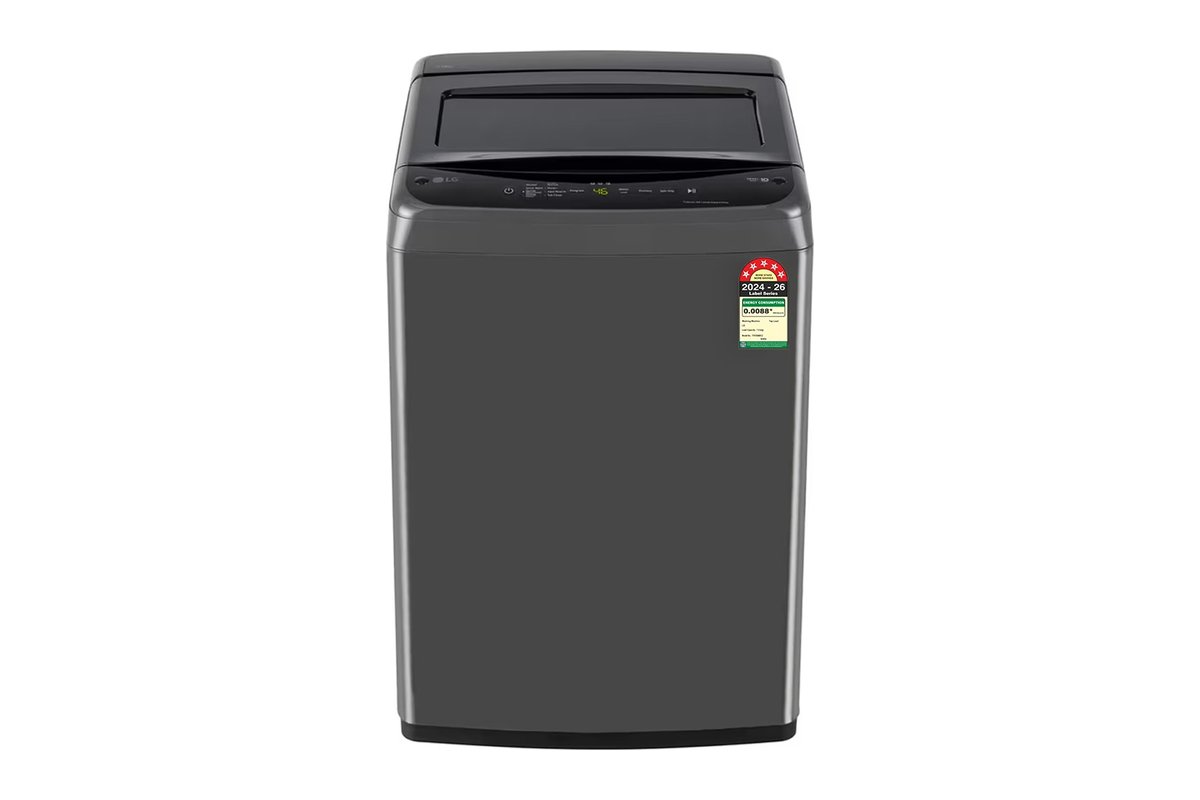
One of Amazon’s best-selling washers, with auto restart after a power cut and a label of just 0.0088 units per kg per wash, about Rs 128 a year. Cold wash only, and Quick Wash needs decent pressure to finish on time. Check the LG T70VBMB1Z on Amazon, around Rs 18,990.
Whirlpool Magic Clean Pro SW H 8 kg (top load)
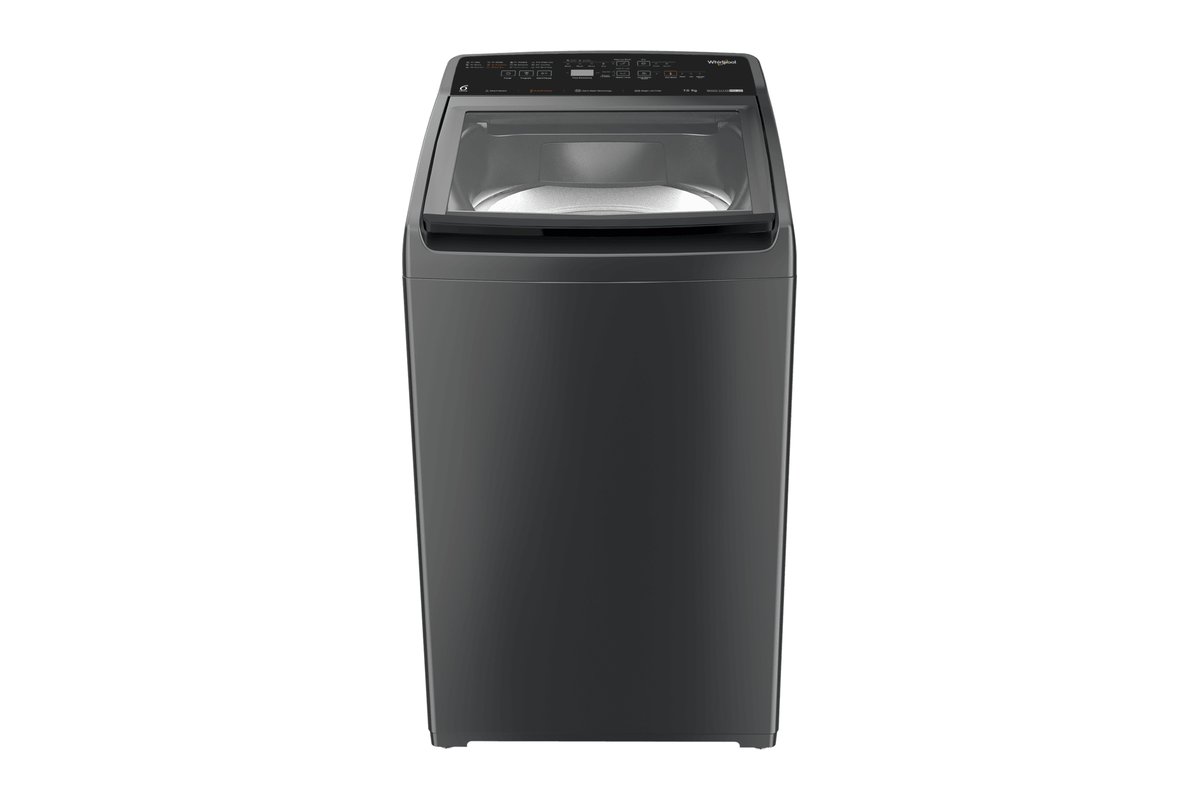
The top-loader for hot washes without paying front-loader money: an in-built heater, a Hard Water Wash programme and 8 kg for around Rs 19,990. Owner ratings are weaker than the IFB’s. Buy the 8 kg Magic Clean Pro SW H on Amazon.
Where to go next
- Front-loader: our best front-load washing machines under Rs 30000, including a 6 kg option.
- Top-loader: our top-load washing machine guide, from 7 to 10 kg.
- The label itself: our BEE star rating explainer on what changed in 2026.
Last updated: October 2026